
Sawing Sterling Silver Sheet and Wire
How to select and tension jeweler's saw blades, support metal correctly on a bench pin, and cut accurate curves in sterling silver sheet.
Read articleSterling Silver & Metal Jewelry
Practical reference covering the core metalsmithing operations — sawing, soldering, forming, and finishing — used by jewelers working with sterling silver and non-ferrous metals in Poland.
Techniques
Each article covers one stage of the jewelry-making workflow in detail — from cutting metal sheet to the final polished surface.
How to select and tension jeweler's saw blades, support metal correctly on a bench pin, and cut accurate curves in sterling silver sheet.
Read article
A step-by-step approach to fluxing, placing solder pallions, and controlling torch heat across multiple joins in a single piece.
Read article
Covering tube and dome forming, filing, sanding through grits, and polishing compounds used to bring sterling silver to a bright finish.
Read articleAbout Sterling Silver
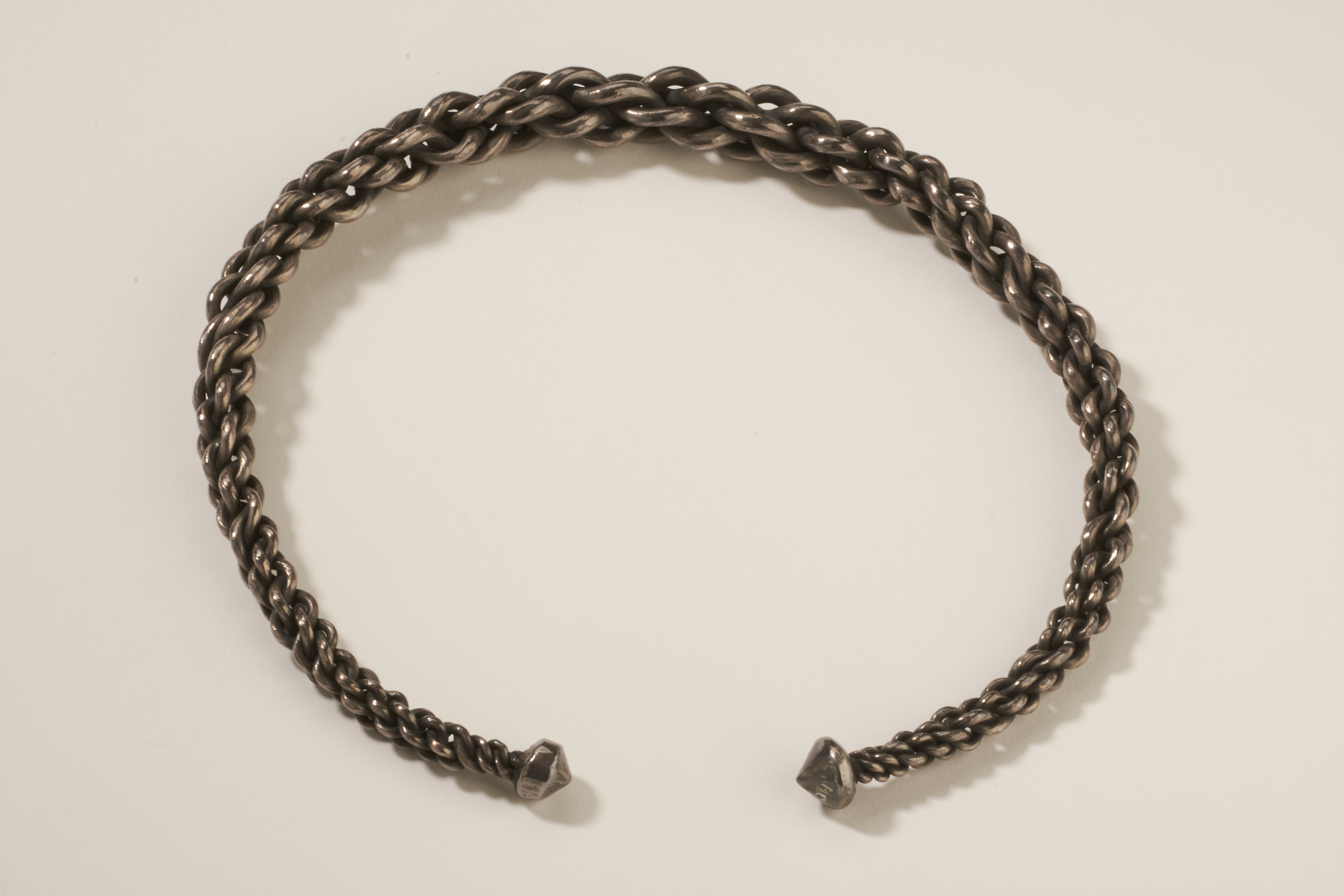
Sterling silver — 92.5% pure silver alloyed with 7.5% copper — is the standard working metal for handmade jewelry. The copper addition hardens the otherwise soft fine silver, making it suitable for forming under hammer and mandrel, and durable enough for everyday wear.
In Poland, hallmarking is handled through the Główny Urząd Miar (GUM). Pieces with a fineness of 925‰ or higher carry the 925 mark. Knowing this system is practical when sourcing certified sheet or wire from Polish suppliers.
Reference
Composition
92.5% silver + 7.5% copper. Standard fineness for jewelry in the EU. Polish mark: 925.
Melting Range
Solidus at 893 °C, liquidus at 940 °C. Soldering occurs well below solidus with appropriate solder grades.
Annealing
Heat to dull orange in dim light, then quench in water or allow air-cool. Restores ductility after work hardening.
Contact
Questions about content or corrections to technical details — use the form below.